 kaiogame.com
The Isle: How to Survive, Grow, and Become a Stronger Dinosaur in Evrima
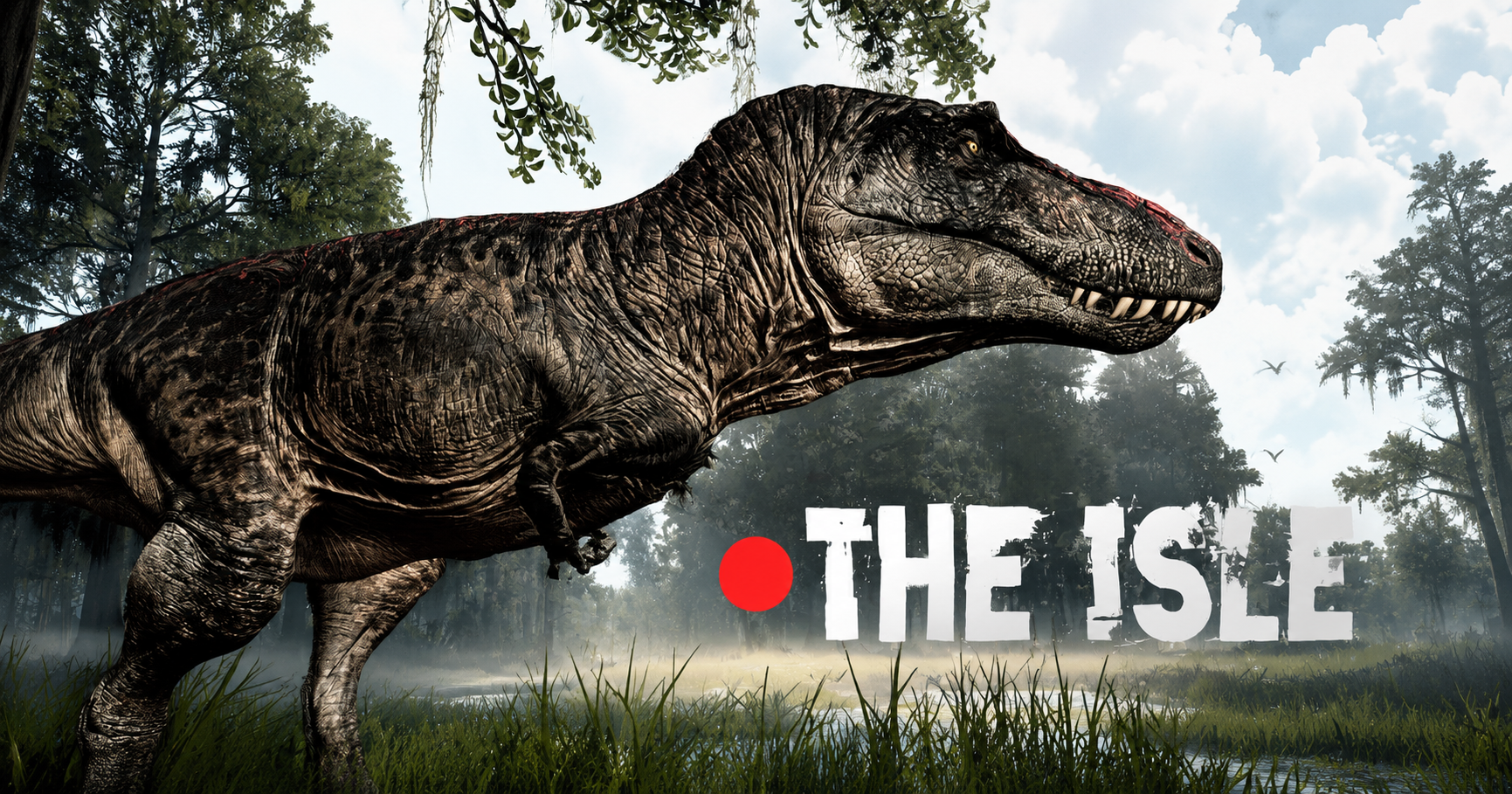
The Isle: How to Survive, Grow, and Become a Stronger Dinosaur in Evrima
Introduction
Surviving in The Isle is not simply about choosing a powerful dinosaur and defeating everything that approaches. The game places players inside a dangerous prehistoric ecosystem where hunger, thirst, injuries, predators, environmental hazards, and other players constantly influence their chances of survival. Every dinosaur begins with limitations, and even a creature that eventually becomes a powerful adult can be vulnerable during its early growth stages. Learning how to manage these risks is essential because dying means losing the progress made with that character.
For beginners, the biggest challenge is understanding what to do immediately after spawning. There are no traditional quest markers guiding every decision, and players must learn to locate food, identify water sources, recognize danger, and understand their dinosaur's abilities. The experience becomes much easier when survival is approached as a sequence of connected decisions instead of a series of random encounters.
This guide focuses on The Isle: Evrima, explaining how to begin a life, choose a suitable dinosaur, manage food and nutrients, grow efficiently, navigate the environment, avoid predators, and eventually participate in group activities. It follows a practical progression from the first moments after spawning to adulthood, giving players a repeatable survival routine rather than relying on luck.

1. Choose the Right Game Version, Server, and Dinosaur
Before starting a new life, make sure you understand which version of The Isle you are playing. The game has different branches, including Evrima and Legacy, and their mechanics, playable creatures, maps, and controls are not interchangeable. This guide concentrates on Evrima, so players should confirm that they have selected the appropriate branch through Steam before following its advice. Guides written for Legacy may describe systems that do not work the same way in Evrima.
The server you choose also affects your experience. Official servers generally provide a more demanding survival environment, while community servers may adjust growth rates, rules, or other settings. A beginner who wants to understand the basic mechanics without spending an extremely long time recovering from every mistake may prefer a well-moderated community server with faster growth. However, read its rules before joining because group limits and gameplay restrictions can differ.
How to select a beginner-friendly dinosaur
Your first dinosaur should help you learn movement, food discovery, and environmental awareness. Small or relatively mobile species can be easier to manage because they may have more opportunities to escape dangerous encounters. Dryosaurus and Hypsilophodon are examples of smaller herbivores that can help beginners learn how to forage and avoid predators. Pteranodon offers a different experience for players interested in flight and aerial movement, although flying introduces its own stamina and landing considerations.
Before selecting a species, consider these factors:
- Diet: Determine whether the dinosaur is a carnivore or herbivore and learn which food sources it can use.
- Movement: Consider speed, turning ability, stamina, and how easily it can navigate difficult terrain.
- Growth: Check how long the species takes to reach adulthood.
- Combat: Understand whether it relies on escaping, defensive attacks, ambushes, or group hunting.
- Survival difficulty: Avoid choosing a demanding species simply because it looks powerful.
Check the server before committing
Once you join, pay attention to the server's population and rules. A crowded server can provide more opportunities for social play, but it can also make food sources and water areas more dangerous. A quieter server may give you more room to learn the map. The best choice is one that lets you practice without constantly being forced into fights before understanding your dinosaur.
2. Complete Your First Minutes After Spawning
The first few minutes determine whether your dinosaur begins its life with a manageable survival plan or immediately enters a dangerous situation. Do not rush toward distant calls or open areas as soon as you appear. Start by checking your character information, growth stage, hunger, thirst, stamina, and diet. Understanding these indicators helps you decide which resource needs attention first.
Your immediate objective is to locate food and water while maintaining a safe escape route. Use nearby vegetation, rocks, trees, and terrain to reduce how easily other players can see you. A young dinosaur is particularly vulnerable because it lacks the health, size, and combat ability of an adult. Even if you find an attractive food source, approaching it carelessly can expose you to predators.
Learn the basic controls
The default controls are important because you will use them constantly. They can be changed in the settings, so check your key bindings if an action does not work as expected.
ControlMain functionQUse scent to locate nearby resourcesEInteract, eat, or drink when correctly positionedTABReview character and status informationXActivate night vision where supportedHRest or recover, depending on the situationCCrouch and reduce your profileNAccess relevant courtship or nesting interactions
Establish a short survival routine
Instead of travelling a long distance immediately, create a small route between a safe resting place, a food source, and a water source. This gives you several options if one location becomes dangerous. Before moving, check your surroundings and listen for footsteps, calls, and other signs of nearby dinosaurs.
A useful opening routine is:
- Check your dinosaur's status and diet.
- Use scent to identify nearby food and water.
- Observe the area before approaching a resource.
- Eat or drink only when the surroundings appear safe.
- Find cover and recover stamina before travelling farther.
This routine reduces unnecessary movement and gives you time to learn how your species behaves.
3. Use Scent to Find Food, Water, and Environmental Information
Scent is one of the most important survival tools in Evrima. Instead of relying entirely on visual searching, players can use the scent system to identify nearby resources and follow useful environmental information. Holding Q activates the scent function under the default controls. Depending on the dinosaur and surrounding conditions, it can help reveal water, edible plants, carcasses, blood, or other relevant traces.
For a beginner, scent should become part of almost every travel decision. Walking randomly through unfamiliar terrain wastes time and may expose your dinosaur to predators. Using scent before moving helps you identify possible destinations and choose a route that makes sense. However, scent is not a guarantee of safety. It does not tell you whether another player is waiting near the resource or whether the route is safe to cross.
How to use scent effectively
Begin by stopping in a location where your dinosaur is reasonably protected. Activate scent and look for useful information. If you identify a resource, do not immediately run toward it. First examine the surrounding terrain and consider whether another route offers better cover.
Carnivores and herbivores use scent differently because their food requirements are different. Herbivores need to locate appropriate plants and other suitable food sources, while carnivores may search for carcasses, blood trails, or potential prey. Learn which indicators are relevant to your current species instead of assuming every scent marker is edible.
Build a resource-search habit
Use the following process when searching:
- Stop somewhere with cover before activating scent.
- Identify the closest useful food or water indicator.
- Check whether the route passes through open ground.
- Move toward the resource in short stages.
- Recheck your surroundings before eating or drinking.
- Leave if the area becomes crowded or suspicious.
Remember that scent has limitations
Environmental conditions and updates can affect how scent information behaves. Rain, distance, species differences, and other factors may change what you can detect. Treat the scent system as a guide rather than a perfect radar. Combine it with sound, visual observation, and knowledge of the map to make better decisions.
4. Find Food and Manage Your Dinosaur's Diet
Food management is more complicated than filling the hunger bar. In Evrima, dinosaurs also depend on nutrients that influence growth and other aspects of survival. The three main nutrient categories are proteins, lipids, and carbohydrates. Different species have different preferred food sources, so players should inspect the diet information for their current dinosaur rather than assuming that every edible object provides the same benefits.
Herbivores generally search for suitable plants and vegetation, while carnivores depend on prey, carcasses, and other meat sources. The challenge is finding the correct food without spending too much time in exposed areas. A perfect diet may improve growth, but it is not worth risking your dinosaur by travelling through a dangerous location when a safer food source is available nearby.
Understand the three nutrients
The nutrient system rewards players who find food that matches their dinosaur's dietary requirements. A balanced combination can increase the growth rate significantly. According to the current Evrima growth guide, one nutrient provides the baseline growth rate, two can provide a higher multiplier, and all three can reach a 300% growth rate. Exact food availability and balance depend on the species and current game version.
A practical food strategy should prioritize:
- Immediate survival: Prevent hunger from becoming critical.
- Nutrient balance: Search for preferred foods that fill missing nutrient categories.
- Safe access: Avoid food locations that require unnecessary exposure.
- Efficient travel: Choose routes that connect multiple useful resources.
- Regular checks: Revisit the diet panel as your needs change.
Do not confuse hunger with diet quality
A full stomach does not necessarily mean that your dinosaur has an ideal diet. You may have enough food to survive but still be missing important nutrients. Conversely, spending too long searching for a perfect combination can become dangerous if hunger is already low.
The best approach is to secure enough food first and improve nutrient balance whenever a safe opportunity appears. This keeps survival as the priority while still allowing you to grow efficiently.
5. Find Safe Water and Avoid Dangerous Riverbanks
Water is essential, but approaching a river or lake can be one of the most dangerous decisions in The Isle. Water sources attract many species, including predators that may use the shoreline to ambush other dinosaurs. Deinosuchus is particularly important to recognize because it can remain concealed in water and attack animals that approach the bank without checking their surroundings.
Beginners often make the mistake of running directly toward a water indicator and drinking immediately. This creates a predictable pattern that other players can exploit. Instead, treat every water source as a potential danger area. Observe the shoreline, listen for movement, and identify a route that allows you to leave quickly if something approaches.
How to approach water safely
Before drinking, stop at a distance where you can inspect the surrounding area. Look for movement in the water, unusual ripples, nearby footprints, and other dinosaurs. Avoid approaching from an exposed direction if you can use vegetation or terrain for cover.
A safer drinking process looks like this:
- Locate water using scent.
- Identify an approach with nearby cover.
- Observe the water surface before moving closer.
- Check for possible escape routes on both sides.
- Drink only when the immediate area appears reasonably safe.
- Leave the shoreline instead of resting beside it.
Understand the risks of crossing
Drinking and crossing are different activities. A dinosaur may be able to drink safely from a shallow edge but still face serious danger when entering deeper water. Some species are strong swimmers, while others can struggle with stamina, depth, or movement.
Never assume a river is safe simply because another dinosaur crossed it. Species abilities and individual circumstances differ. If you must cross, examine the distance, current conditions, possible exits, and available stamina before entering. A longer route along a safer bank is often better than a short crossing that could end your life.

6. Grow Faster by Managing Resources and Staying Alive
Growth is the central progression system in Evrima. Your dinosaur moves through different stages, beginning as a juvenile and eventually reaching adulthood. Each stage changes your size, strength, and survival capabilities. As you grow, you may gain access to additional abilities and become more capable of defending yourself, but the process takes time and requires consistent resource management.
The most important principle is that growth depends on more than simply waiting. Your diet affects the speed at which the growth bar advances, while hunger and thirst problems can interrupt progress. Fighting, travelling, and recovering from injuries can also make your growth routine less efficient. Players who repeatedly enter unnecessary combat may spend more time recovering than developing their dinosaur.
Use a growth-focused routine
Start by identifying the food sources that provide the nutrients your species needs. Once you have a safe resource area, use it as a base for short trips rather than constantly travelling across the map. This reduces the time spent exposed to predators and makes it easier to maintain your diet.
Make each growth stage a different objective
Juvenile stage: Prioritize hiding, learning controls, locating reliable food, and finding water. Avoid fights against larger dinosaurs.
Subadult stage: Begin learning your species' defensive and offensive abilities. You may be able to contribute more to a group, but you should still avoid unnecessary risks.
Adult stage: Use your increased size and abilities more confidently, while remembering that other adult dinosaurs can still threaten you.
Avoid common growth mistakes
- Fighting when your stamina is low.
- Travelling too far for a single food source.
- Ignoring thirst until it becomes urgent.
- Remaining in crowded areas without a reason.
- Choosing a perfect diet over a safe route.
- Resting in locations where predators can approach unseen.
Growth is a long-term survival task. The fastest player is not necessarily the one who moves constantly, but the one who avoids wasting time on preventable mistakes.
7. Navigate the Map and Build Reliable Travel Routes
The Isle does not guide players through a conventional sequence of objectives. You must learn the environment, recognize landmarks, and understand where resources are likely to appear. This can be difficult during your first few lives, especially when you do not know which direction leads to water or where other players commonly gather.
A reliable travel route should connect three important points: food, water, and a safe resting location. If possible, include an alternative route in case another dinosaur occupies the area. This creates flexibility and prevents you from becoming trapped between a resource and a dangerous encounter.
Learn landmarks instead of wandering
Pay attention to distinctive environmental features such as rivers, cliffs, rock formations, forests, and unusual structures. These landmarks help you understand where you are even when you do not have a conventional quest marker. As you travel, remember how different areas connect and which paths provide the most cover.
If you are playing on Gateway, learn the general layout of its major regions and resource areas. Community maps can help you understand the geography, but they should not replace observation inside the game. Resource locations and gameplay conditions can change, and a route that was safe during one session may be dangerous during another.
Plan each journey in stages
A good route should not depend on reaching one distant destination without stopping. Divide the journey into manageable sections:
- Identify the nearest safe landmark.
- Check your hunger, thirst, and stamina.
- Choose a route with cover.
- Stop periodically to listen and use scent.
- Reassess the surroundings before entering an exposed area.
- Identify an alternate direction if the original route becomes unsafe.
Learn when to abandon a route
If you hear repeated aggressive calls, notice several unfamiliar dinosaurs gathering, or discover that your destination is occupied, do not force the original plan. Change direction and look for another resource. Survival depends on adapting to new information, not stubbornly following a route that has become dangerous.
8. Avoid Predators and Learn When to Fight or Escape
Combat in The Isle is dangerous because injuries can create problems long after an encounter ends. A fight may cause damage, bleeding, fractures, or other status effects depending on the species and attack involved. Even if you survive the immediate confrontation, you may become weaker and more vulnerable to the next predator.
For beginners, escaping is often a better decision than fighting. A smaller dinosaur should not challenge a larger opponent simply because it has an attack button. Your chances depend on size, health, stamina, position, species abilities, and the number of enemies involved. A fight that looks manageable at first can quickly become impossible if another predator joins.
Recognize danger before it becomes combat
Listen carefully. Footsteps, calls, and growls can reveal the presence of another dinosaur before you see it. Use vegetation, rocks, and terrain to break the opponent's line of sight. If you suspect that a predator is nearby, avoid running directly into open ground where it can track your movement.
When an encounter begins, assess three things:
- Size difference: Can your dinosaur realistically defend itself?
- Stamina: Do you have enough energy to escape or fight?
- Environment: Is there cover, difficult terrain, or a safe route nearby?
Learn your species' combat abilities
Different dinosaurs have different ways of fighting. Some rely on speed, some use powerful attacks, and others have special abilities such as pouncing or grappling. Herbivores may have defensive tools that allow them to resist attackers, while carnivores may depend on ambushes, teamwork, or damage over time.
Practice these abilities in a low-risk environment or Sandbox mode before depending on them in Survival. Learn the range of your attacks, how stamina is consumed, and how your dinosaur responds to turning and movement. Do not enter a serious fight without understanding what your species can actually do.
Know when to retreat
Retreat when your health is low, your stamina is depleted, or the opponent has a clear advantage. Do not chase a wounded enemy into unfamiliar terrain simply because it appears weak. A successful survival decision is not always a kill. Sometimes the best outcome is leaving the encounter alive.
9. Survive With Groups, Herds, and Other Players
Playing with other dinosaurs can make survival easier, but joining a group does not automatically guarantee safety. A coordinated herd or pack can detect danger earlier, protect vulnerable members, and help locate resources. However, groups also attract attention, create noise, and may require players to compete for food.
Choose companions carefully. A group with compatible species and clear communication is usually more useful than a large collection of players who do not understand one another. Learn the server's group rules and species limits before inviting others. Some servers have restrictions that affect which dinosaurs can travel or fight together.
Use calls and communication carefully
Calls help players communicate over distance and identify their intentions. However, calling constantly can reveal your position to nearby predators. Use communication when it serves a purpose, such as locating a separated group member or warning others about danger.
A useful group routine includes:
- Establishing a meeting location.
- Staying within a reasonable distance of companions.
- Communicating when someone notices a threat.
- Avoiding unnecessary fights near vulnerable juveniles.
- Sharing information about food and water locations.
- Agreeing on a retreat direction before combat begins.
Understand the responsibilities of group survival
A group must consider the needs of its members. Larger dinosaurs may require more food, while younger members may be unable to keep up during long journeys. If the group moves too quickly, weaker members can become separated and vulnerable.
Do not assume that every nearby dinosaur is friendly. Some players may pretend to cooperate before attacking, while others may simply be defending their territory or food. Observe behavior and avoid giving strangers unnecessary opportunities to approach your vulnerable side.
10. Prepare for Adulthood, Mutations, and Nesting
Reaching adulthood changes the way you approach survival. Your dinosaur has more developed capabilities, but this does not mean that you can ignore hunger, thirst, stamina, or environmental danger. Adult dinosaurs still need to maintain their resources and choose encounters carefully. The difference is that you can begin participating in more advanced activities, including stronger group roles and reproduction systems where supported by the species and current build.
Mutations add another layer of long-term progression. They can influence aspects of your dinosaur's capabilities, and the available choices depend on the current Evrima systems. Rather than selecting a mutation simply because its description sounds powerful, think about how it supports your playstyle. A player who prefers long journeys may value resource efficiency, while someone who frequently fights may prioritize a different benefit.
Learn how nesting works
Nesting is an advanced activity that allows players to create opportunities for other players to join the game as hatchlings. It involves finding a suitable location, preparing the nest, producing eggs, and protecting the young. The process requires planning because nests and eggs can attract attention from predators.
Before attempting to nest, make sure you understand the requirements for your species and the current server rules. Choose a location that provides access to food and water without placing the nest in an obvious danger zone. Parents also need enough resources to support the process, so do not begin when your dinosaur is already struggling with hunger or thirst.
Protect the next generation
Hatchlings are especially vulnerable, and their survival depends heavily on the surrounding environment and the behavior of other players. Parents and group members should remain alert, avoid unnecessary travel, and understand how feeding works for their species.
A responsible nesting routine includes:
- Selecting a location with nearby resources.
- Checking the surroundings before building or laying eggs.
- Maintaining food and water reserves.
- Protecting the nest from approaching predators.
- Learning the correct feeding interactions.
- Avoiding unnecessary movement while hatchlings are vulnerable.
Continue adapting after reaching adulthood
Adulthood should not be treated as the end of learning. Each life provides more information about the map, species interactions, combat, and survival decisions. You can experiment with different routes, join groups, learn advanced abilities, or participate in nesting. The most successful players are those who continue adjusting their behavior instead of assuming that size alone makes them safe.

Conclusion
Learning how to survive in The Isle: Evrima requires patience, observation, and consistent decision-making. The most important skills begin with choosing a manageable dinosaur, understanding the server, checking your status, and using scent to locate food and water. From there, you must learn to balance nutrients, grow efficiently, recognize dangerous locations, and navigate the environment without exposing yourself unnecessarily.
Combat and group play become easier when you understand your dinosaur's strengths and limitations. Not every encounter needs to become a fight, and not every group offers reliable protection. Keeping stamina available, listening for nearby threats, and maintaining alternative escape routes are often more valuable than trying to defeat every opponent.
Once you reach adulthood, you can explore more advanced systems such as mutations, specialized combat abilities, and nesting. However, the basic survival principles remain the same: understand your needs, gather information before moving, and adapt when conditions change. The Isle rewards players who think like animals living in a dangerous ecosystem rather than players rushing through a conventional action game.
The best way to become a stronger dinosaur is to survive one decision at a time.