.webp)
Where Winds Meet: Why Inner Ways Can Quietly Break a Build Before Endgame

Where Winds Meet: Why Inner Ways Can Quietly Break a Build Before Endgame
Where Winds Meet offers an unusually flexible combat system because players are not locked into a traditional character class. Weapons, Martial Arts, Inner Ways, Mystic Skills, equipment and Path combinations can all be adjusted to create different combat styles. However, that freedom creates a specific progression problem that is easy to overlook: investing in Inner Ways before understanding how their triggers interact with your actual Martial Arts rotation can leave a character with plenty of upgrades but a poorly functioning build.
This is particularly important because Inner Ways are passive abilities rather than conventional skills that players press during combat. They activate when specific conditions are met, and many of them are tied to particular weapons or Paths. Players can equip only a limited number at once, so simply collecting rare Inner Ways does not guarantee that a build will become stronger.
The problem becomes more serious as the character advances. Early in the game, almost any useful passive can provide noticeable value. Later, however, the difference between an Inner Way that consistently activates during your rotation and one that rarely triggers becomes much more significant. The solution is not to chase a universal list of “best” Inner Ways, but to understand the relationship between your chosen weapon pair, Path, combat loop and passive triggers before spending limited upgrade resources.
1. The Problem Begins When You Treat Every Inner Way as a Generic Stat Upgrade
When players first encounter Inner Ways, it is easy to interpret them as another layer of passive statistics. An Inner Way may increase damage, improve survivability, create a buff or add another combat effect, so the natural reaction is to compare rarity and numbers. That approach works reasonably well during the earliest stages, but it becomes increasingly unreliable as the combat system becomes more specialized.
Inner Ways can be Universal or connected to particular Martial Arts and Paths. The game allows players to equip four Inner Ways simultaneously, meaning every slot represents an opportunity cost. An Inner Way that looks powerful in isolation may be less useful if its activation condition does not fit the attacks you actually use.
The Hidden Cost of a Bad Passive
The biggest problem is not necessarily that an unsuitable Inner Way provides zero value. Instead, it can provide value inconsistently.
Imagine a passive that activates after repeatedly performing a particular type of attack. If your normal rotation spends most of its time dodging, swapping weapons or using another ability, that passive may remain inactive during important portions of a fight. A supposedly powerful passive then contributes far less than its description suggests.
Read the trigger before the reward
The most important part of an Inner Way description is often not the damage percentage or bonus attached to it. It is the condition that activates the effect.
Before investing resources, ask:
- What action activates this Inner Way?
- How frequently does that action appear in my rotation?
- Does the effect require a specific weapon?
- Does it require a specific Path?
- Does it depend on a status effect?
- Does it disappear when I am hit?
- Does it require a particular combat situation?
Those questions reveal whether the passive actually belongs in your build.
2. The First Real Build Decision Happens When You Choose Your Weapon Pair
Where Winds Meet allows players to use two Martial Arts rather than forcing a single permanent weapon identity. This makes weapon selection more important than simply choosing whichever individual weapon has the highest apparent damage.
The two weapons need to coexist within an actual combat loop. One may provide the main source of damage while the second handles recovery, defense, crowd control, ranged pressure or another specialized function. Inner Ways then sit on top of this relationship and amplify particular parts of the rotation.
The result is a layered system:
Weapon Pair → Path Interaction → Martial Arts Rotation → Inner Way Triggers → Gear and Stats
Changing the first layer can therefore invalidate decisions made in later layers.
Why Copying Another Player's Build Can Fail
A build posted online may show four Inner Ways that produce excellent results for its creator. That does not automatically mean the same four passives will produce the same result for another player.
The reason is simple: the effectiveness of a passive depends on what the player actually does.
A player who consistently maintains a particular status effect can activate an Inner Way repeatedly. Another player using the same weapons but a different rotation may rarely create the necessary condition. The names and equipment may look identical while the actual combat behavior is completely different.
This is why understanding the trigger is more useful than memorizing a build list.
3. The Next Step Is Understanding Path Synergy Before Spending Upgrade Materials
Paths provide another layer of specialization. Inner Ways can be associated with particular Paths, while General Inner Ways are designed to work across different setups. This distinction exists because the game expects players to construct combinations rather than simply collect isolated passives.
For a player still experimenting with weapons, General Inner Ways can provide flexibility. For a player who has committed to a specific Martial Arts combination, Path-oriented Inner Ways can become much more interesting because their effects are designed around particular mechanics.
Path-Specific Does Not Automatically Mean Better
A common mistake is assuming that a Path-specific Inner Way should always replace a Universal option.
That is not necessarily true.
A specialized passive is useful only when its specialization matches the build. If your combat loop does not activate its condition reliably, a Universal Inner Way with a simpler trigger can contribute more consistently.
This creates a useful hierarchy when evaluating a passive:
- Does it work with my weapons?
- Does its trigger occur naturally?
- Does its effect improve my primary combat objective?
- Does it overlap with another passive?
- Only then should rarity and upgrade potential become major considerations.
Build Around the Combat Loop
Instead of beginning with the Inner Way menu, begin with the question:
“What do I actually do during a difficult fight?”
If the answer is repeated light attacks followed by a charged finisher, your Inner Ways should interact with that sequence. If the answer is maintaining distance and switching between ranged and close-range attacks, your passive selection should reflect that instead.
The passive system becomes easier when the character's actual behavior is identified first.
4. The First Upgrade Mistake Happens When Players Spend Resources Too Early
Unlocking an Inner Way and upgrading an Inner Way are different decisions. Unlocking gives you access to the passive. Upgrading increases its effectiveness and can unlock additional benefits.
This distinction matters because upgrade resources are not unlimited. Inner Ways can require Notes, Tips or other progression materials, while systems such as Tips Exchange and Inner Way Conversion exist to help players manage unwanted or duplicated resources.
The temptation is to upgrade the first Inner Way that looks powerful. That can be expensive if you later discover that your preferred weapon combination does not use it effectively.
Test Before You Commit
A better approach is to separate three stages:
Stage One: Unlock
Obtain the Inner Way and understand its basic trigger.
Stage Two: Test
Use it during normal combat and observe how frequently the effect activates.
Stage Three: Invest
Only after confirming that the passive fits your actual rotation should you spend significant resources improving it.
This approach is particularly valuable when experimenting with new Martial Arts.
The five-minute test
Take the Inner Way into several ordinary encounters and ask:
- Did the passive activate without deliberately forcing it?
- Did it activate during the attacks I already use?
- Did I notice its effect during difficult moments?
- Did another Inner Way provide a more consistent benefit?
- Would changing my rotation just to activate this passive make combat less comfortable?
If the answers are mostly negative, upgrading it further may not solve the underlying problem.
5. Trigger Conditions Become More Important as Combat Gets Faster
A passive that looks excellent on paper can behave very differently during real combat. The reason is that combat conditions change rapidly. Bosses move, interrupt attacks, force dodges and create periods where the player cannot perform their preferred sequence.
This means that a passive dependent on uninterrupted actions can become less reliable against difficult opponents than it appears during training.
For example, an effect that requires several consecutive attacks might perform beautifully against a stationary enemy. Against a boss that repeatedly forces repositioning, the same effect may reset before reaching its full potential.
Consistency Versus Maximum Potential
This creates an important distinction between two types of Inner Way:
Burst-oriented passives can provide substantial value when their conditions are met.
Consistency-oriented passives may provide smaller bonuses but activate under a much wider range of situations.
Neither category is automatically superior. The important issue is what your build needs.
If your character already has excellent sustained damage but struggles to survive interruptions, another offensive passive may not solve the real problem. Conversely, if your build is highly defensive but lacks a reliable damage window, a more aggressive passive could address the actual weakness.
The Boss Test Is Different From the Training Test
A build should not be judged only against weak enemies.
Use three situations:
- Regular enemies for rotation consistency.
- Elite enemies for pressure testing.
- Boss encounters for interruption and survival testing.
An Inner Way that performs consistently across all three situations is fundamentally different from one that only shines when the player can attack uninterrupted.
6. Weapon Switching Can Make or Break Your Inner Way Combination
Because Where Winds Meet allows two Martial Arts, weapon switching becomes an important part of advanced combat. The difficulty is that a passive may be highly effective with one weapon while doing little for the other.
This creates a potential trap: players can equip two excellent weapon-specific Inner Ways and discover that only one is active during large portions of the fight.
The problem is particularly obvious when one weapon serves as the main damage tool and the second exists mainly for utility.
Build Around Roles, Not Just Weapons
Before choosing the four Inner Ways, define the role of each Martial Art.
For example:
Weapon A
- Main damage
- Primary combo
- Main status application
Weapon B
- Defense
- Healing
- Crowd control
- Emergency recovery
Then classify each Inner Way according to its function.
Inner Way RoleQuestionDamageDoes it amplify the attack sequence I actually use?DefenseDoes it activate when I am under pressure?RecoveryDoes it support the moments when I switch weapons?StatusCan my rotation reliably maintain its required status?UniversalDoes it solve a weakness shared by both weapons?
This approach prevents a common mistake: building two independent weapon setups without considering how they operate together.
7. Some of the Most Valuable Inner Ways Are Hidden Behind Exploration
Another reason Inner Ways are easy to mishandle is that acquiring them is not always a straightforward progression reward. Some are obtained from merchants, some through clues or quests, and others through Martial Arts Sanctums and Skill Theft.
This makes Inner Way progression fundamentally different from simply leveling your character.
You may discover that the passive you need is not obtained through ordinary combat progression. Instead, the game may require you to investigate an NPC, purchase pages, solve a clue, complete an encounter or infiltrate a Sanctum.
The Development Menu Is More Important Than It Looks
The Inner Way interface can be used to determine how a particular passive is acquired. Some routes provide information about merchants, while clue-based Inner Ways can direct players toward an exploration area.
This means players should not wait until an external guide tells them where everything is.
Instead:
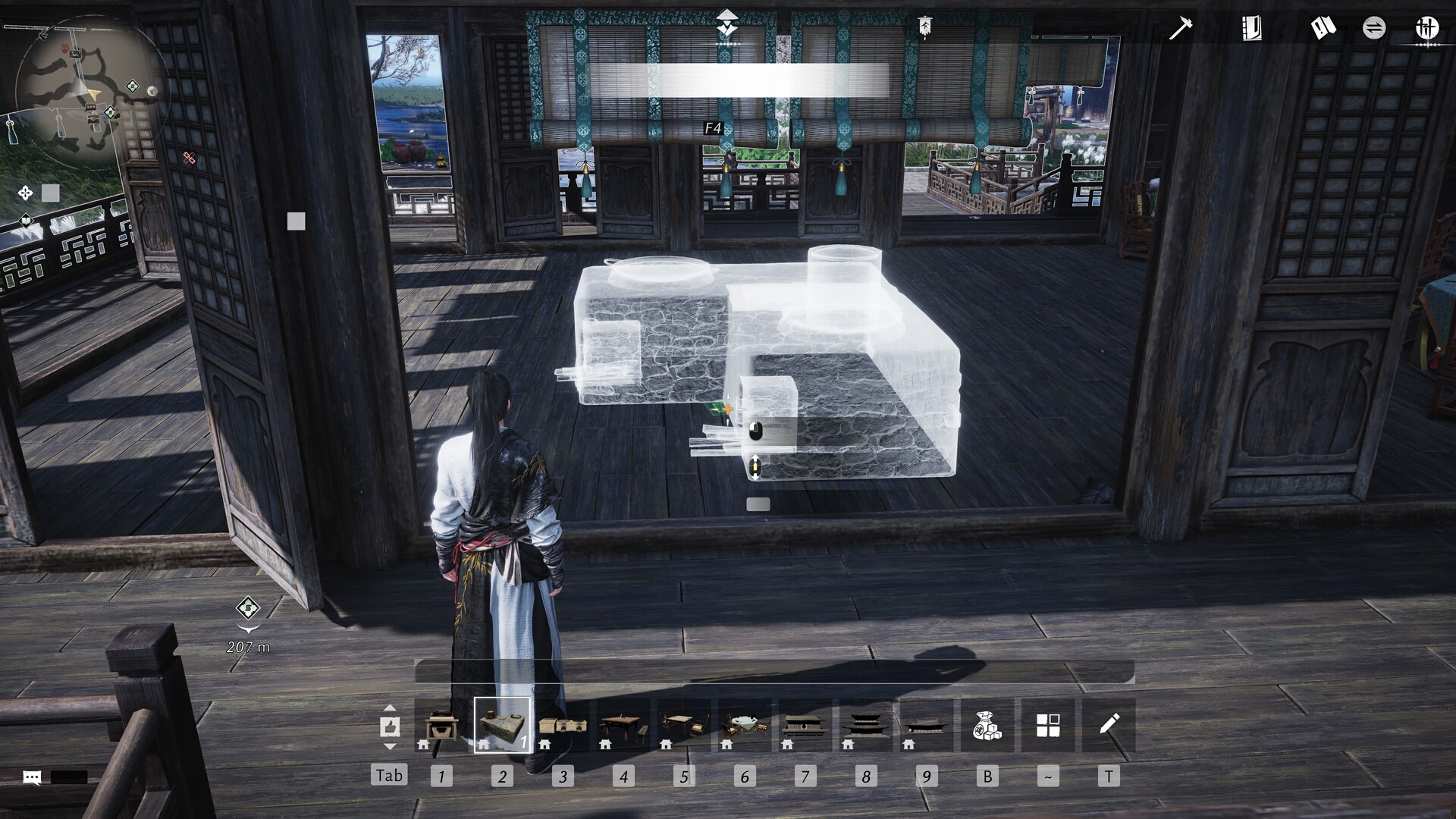
- Open the Inner Way menu.
- Select the desired passive.
- Inspect its acquisition method.
- Follow the indicated route.
- Unlock the passive.
- Test it before investing heavily.
This turns the menu into a progression planner rather than simply an inventory screen.
Sanctums Add Another Layer
Martial Arts Sanctums are especially important because they can combine Martial Arts acquisition with Inner Way progression. Certain weapon-specific Inner Ways are connected to the corresponding Martial Arts obtained through Skill Theft.
As a result, obtaining a new Martial Art can sometimes be the beginning of a larger build upgrade rather than an isolated unlock.
8. The Midgame Is Where a Bad Inner Way Investment Becomes Noticeable
Early progression can hide poor decisions because character power increases from many sources at once. Levels, equipment, Martial Arts, exploration rewards and general upgrades can compensate for a passive that is not particularly well matched to the build.
The situation changes later.
Enemies become more demanding, rotations become more deliberate and the difference between a passive that activates continuously and one that activates occasionally becomes easier to see.
This is where players often mistake a build problem for a gear problem.
When More Gear Does Not Fix the Problem
Suppose your character has acceptable equipment but consistently struggles to maintain damage during longer encounters. The instinct may be to search for stronger gear.
But the real problem could be that your Inner Ways require conditions your rotation rarely produces.
For example:
- Your main attack does not activate the passive.
- Your status effect expires too quickly.
- Your second weapon interrupts the passive's sequence.
- Your defensive behavior prevents the trigger from completing.
- Your boss strategy requires too much repositioning.
In these situations, replacing equipment without changing the passive structure may produce only a small improvement.
Diagnose the System Before Replacing Everything
A useful diagnostic order is:
Rotation → Inner Ways → Weapon Pair → Gear → Secondary Stats
This is not a universal rule for every situation, but it is a useful troubleshooting sequence because the passive system can magnify weaknesses created earlier in the build.
9. The Late-Game Solution Is to Build Around a Repeatable Combat Loop
Once you have unlocked enough Martial Arts and Inner Ways, the goal should shift from collecting everything to creating a repeatable combat loop.
A combat loop is the sequence of actions you can reliably perform against different opponents.
For example:
Apply status → build resource → activate weapon ability → switch weapon → trigger passive → return to primary weapon → repeat
The exact sequence depends on your Martial Arts, but the principle is universal: your Inner Ways should reinforce what you repeatedly do rather than force you to perform awkward actions solely to activate them.
A Strong Build Should Explain Itself
If you cannot explain why each of your four Inner Ways is equipped, the build probably needs another round of testing.
For every slot, identify its job:
Slot 1 — Core Weapon Passive
Enhances the primary damage mechanism.
Slot 2 — Secondary Weapon Passive
Supports the second Martial Art's specific function.
Slot 3 — Universal Damage or Utility
Provides value regardless of which weapon is currently active.
Slot 4 — Problem Solver
Addresses the build's biggest weakness, such as survivability, resource management or status consistency.
This is more useful than simply filling every slot with the highest rarity available.
Avoid Four Passives That Do the Same Job
Another late-game mistake is stacking four effects that all increase damage while ignoring survivability or consistency.
If all four passives require aggressive uninterrupted attacking, one interruption can disable a large part of the build simultaneously.
A more balanced setup may sacrifice some theoretical peak damage in exchange for maintaining useful effects during movement, defense and weapon switching.
10. The Final Lesson: Inner Ways Should Follow Your Build, Not Define It
The deepest issue with Inner Ways in Where Winds Meet is that the system encourages players to think backward. The passive should not automatically determine what weapon you use simply because it has a powerful description.
Instead, determine the combat identity first.
Choose the Martial Arts that you enjoy and can execute reliably. Understand what those weapons are trying to accomplish. Identify their natural Path synergy. Then select Inner Ways that strengthen those mechanics.
This is particularly important because Where Winds Meet continues to expand its Martial Arts ecosystem. New weapons and content can introduce new combinations, meaning a passive that was central to one version of a build may not remain the only sensible choice after a later update. The game's developers described the Hidden Mountain update as a major expansion of the game's world, exploration and combat systems, reinforcing how important it is to treat builds as evolving systems rather than permanent formulas.
A Complete Inner Way Decision Process
When creating or rebuilding a character, follow this sequence:
- Choose your two Martial Arts.
- Identify the Path relationship between them.
- Write down your primary damage mechanism.
- Identify the status effects or resources your rotation naturally generates.
- Search for Inner Ways that activate from those actions.
- Add one or more Universal options if they solve a genuine weakness.
- Test the combination against normal enemies.
- Test it against an elite or difficult encounter.
- Check whether the effects remain active while dodging and switching weapons.
- Only then invest heavily in upgrades.
The most important question
Do not ask:
“Is this Inner Way strong?”
Ask:
“How often will this Inner Way actually work in my hands?”
That question captures the central problem of the system.
Conclusion
Where Winds Meet gives players considerable freedom, but that freedom makes build construction more demanding. Inner Ways are not simply passive stat bonuses that can be selected according to rarity. They are conditional mechanics that interact with weapons, Martial Arts, Paths, status effects and combat behavior.
The biggest mistake is therefore not choosing an objectively weak Inner Way. It is choosing an Inner Way whose trigger does not naturally occur during your own rotation.
A successful build begins with the combat loop rather than the passive menu. Choose the weapons you understand, determine what those weapons naturally do, identify the conditions you repeatedly create, and then select Inner Ways that amplify those conditions. Universal passives can fill gaps, while specialized passives can strengthen a focused weapon strategy. The important factor is whether the effects activate consistently when the fight becomes difficult.
Players should also resist the temptation to spend valuable upgrade resources immediately. Unlock first, test second, invest third. If a passive looks impressive but requires an awkward rotation that you rarely use, changing the passive may be more productive than rebuilding your entire character around it.
Ultimately, the Inner Way system is most rewarding when treated as a combat-engineering problem. The goal is not to own the largest collection of powerful passives. The goal is to create four slots whose effects repeatedly reinforce what your character is already doing.
Once that principle is understood, Inner Ways stop being another complicated menu in Where Winds Meet and become one of the clearest tools for turning a collection of Martial Arts into a coherent combat style.